
Self-eSTEM
FOLLOW US



Published on June 16, 2026
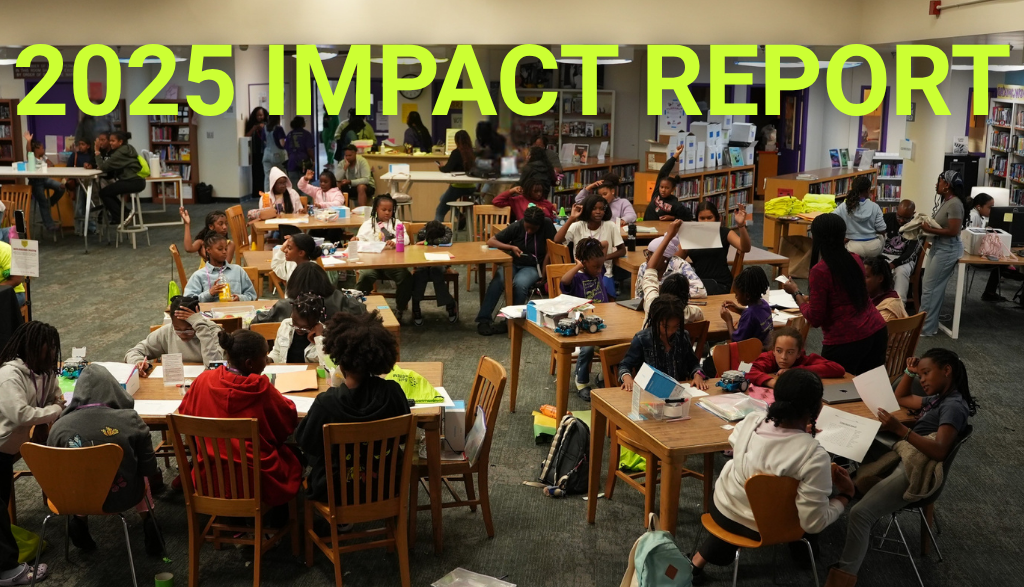
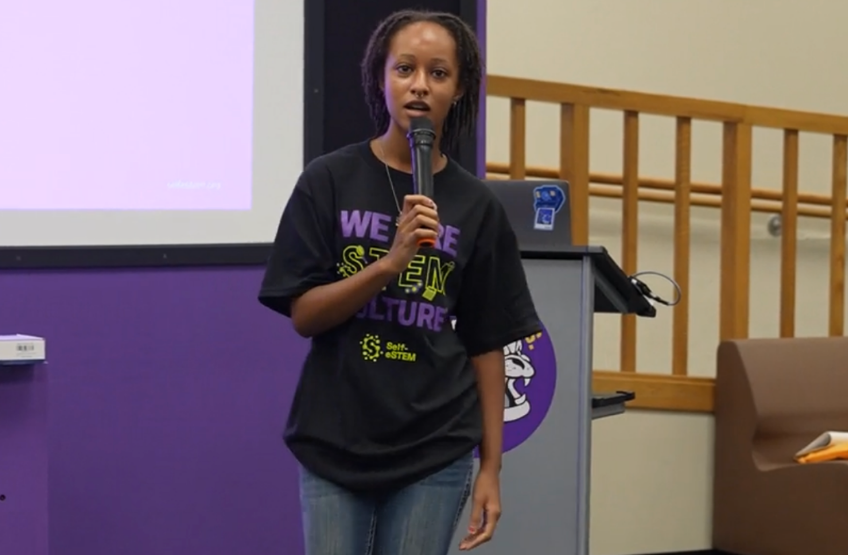
Erikah was eight years old the first time she walked into a Self-eSTEM STEM Exploration Camp. That was 2015. She was not yet thinking about computer science, career pathways, or what it meant to be a woman in tech. She was just a kid from Oakland, curious enough to show up.
Ten years later, in 2025, Erikah came back, this time as a college alumna majoring in Digital Arts, standing at the front of the room as an Alumni Facilitator, guiding the next generation of Innovators through the same program that started it all. “The only reason I thought I could do computer science,” she said, “is because of Self-eSTEM.”
Erikah didn’t become the exception. She became the template, which is exactly what Self-eSTEM set out to build when it launched over a decade ago in Oakland.
Here is what that commitment looked like in 2025, at full scale.
In 2025, Self-eSTEM served 197 Innovators between the ages of 7 and 25, delivering 731 hours of STEM programming across three programs: the Early STEM Immersion Program for youth ages 7-17, the Innovator Sustainment Program for young adults ages 18-25, and the newly launched Future of Work Community-Based Program, which extended Self-eSTEM’s reach into schools, community centers, and neighborhood spaces across the Bay Area in its first year of operation.
One hundred percent of Early STEM Immersion Program participants advanced to the next grade level. Ninety-two percent developed a stronger STEM identity and sense of belonging in the field. Among college alumnae, 82% declared STEM majors, a figure that speaks to what sustained, multi-year engagement actually produces.
Organizationally, 2025 was a defining year. Self-eSTEM closed the year with $560,822 in revenue, a 32% increase over 2024 and the first time the organization has crossed the $500,000 threshold. The organization grew revenue at three times the rate of expense growth. Assets grew 59%, from $119,788 to $190,305. Self-eSTEM also completed its three-year strategic plan and was named one of 10 national nonprofit partners by the F5 Foundation, advancing STEM education and Digital & AI access.
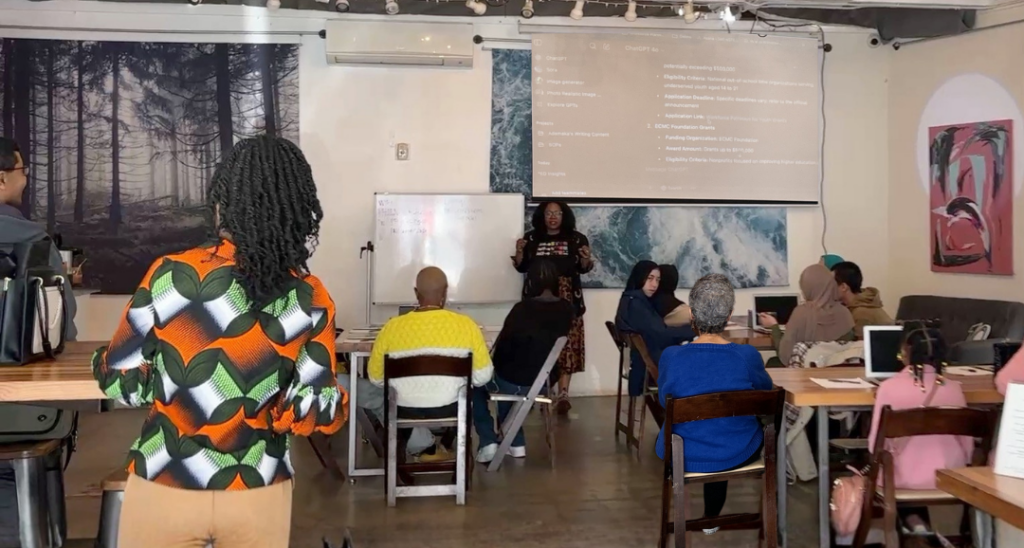
The Digital & AI literacy work earned its own recognition. Self-eSTEM delivered its Digital & AI Literacy Masterclass Series at the City of Oakland’s inaugural Oakland Tech Week, launched a 12-week Digital & AI Literacy programming partnership with KIPP Bridge Academy, and partnered with We Lead Ours (WELO). Across these programs, Self-eSTEM is building the case that Digital & AI literacy is a foundational skill, and Bay Area youth deserve access to it now.
It belongs to Sydney, a high school junior who, without being asked, walked to the whiteboard at the 2025 STEM Exploration Camp and started breaking down coding and math concepts for her peers until everyone in the room understood.
And to Erikah, who came back. And to every Innovator who showed up, stayed, and grew.
It belongs to the families who brought their daughters to camp, trusted us with their time, and watched their daughters walk in as curious kids and walk out as the ones leading the room.
Thank you to our partners who opened doors, co-created experiences, and treated our Innovators as the future professionals they are.
And to the funders and sponsors who made the infrastructure of this work possible: the Golden State Community Foundation and the PG&E Foundation as Disruptor Program Partners; Google, Comcast, F5, Cisco, Intuitive Surgical, and the LLH/LHM Foundation as Trailblazing partners; and Lawrence Berkeley National Lab, Lyft, Synopsys Outreach Foundation, AAUW, Bank of Marin, East Bay Community Foundation, and Alameda County Children and Family Services, whose Explorer-level commitment extends our reach into the neighborhoods that need it most. Thank you.
The data on women in STEM has not moved fast enough. Today, only 28% of STEM bachelor’s degrees go to women, and that number drops to 5.4% for Black women and 3.1% for Latina women. At the same time, AI and automation are reshaping what every job requires, and the skills gap is widening fastest for communities with the least access to training.
This is not a pipeline problem. It’s an access problem. A belief problem. A retention problem, and the window to address it is now, before the next generation is shut out of the fastest-growing careers in the economy by the same access gaps we’re already closing.
Self-eSTEM’s model — multi-year, multi-generational, rooted in community, and built around Digital & AI literacy from day one, is a direct response to that reality. When 92% of Innovators leave with a stronger STEM identity and 82% of college alumnae declare STEM majors, those numbers are not just proof of program quality. They are evidence that the model works, and that Oakland’s girls and young women have always been ready to lead the future of work. The only question was whether someone would build the room.
The 2025 Annual Impact Report documents this work in full: program outcomes, financial transparency, Innovator stories, partner recognition, and the strategic roadmap for what comes next. If you are evaluating a first investment, looking for proof that sustained engagement produces lasting outcomes, or trying to understand what Digital & AI literacy programming looks like in practice for K–12 and young adult learners, the report is the right place to start.
Read it. Share it. And if you are ready to be part of what we are building in 2026, there is a way in.
If you are ready to invest in what comes next, every dollar funds a seat in camp, a facilitator in the room, or a module in the Digital & AI literacy series. Donate to Self-eSTEM.
Stay connected: join our newsletter, the Digital Download, at the bottom of this page.